Deferral rule
Never Let Me GoThe Deferral rule is the belief that a couple from Hailsham who could prove they were truly in love might have their Donations postponed for several years and spend that time together. Its promise reaches beyond a change of schedule: it offers a brief interval of shared life before the students’ assigned futures begin. The rumor gives the students’ art, Madame’s gallery, and the cultivated habits of Hailsham a possible hidden purpose, but that explanation is eventually contradicted by Miss Emily. Hailsham could improve how its students were raised and advocate for their humanity; it could not grant them a reprieve from Donation.
The Rumor and Its Circulation
The story comes to the Hailsham group through Chrissie, who says that she and Rodney heard it while they were in Wales. According to what they had been told, Hailsham students in special circumstances could ask for their Donations to be put back by three or even four years. It was not said to be easy: a couple would have to qualify and convince whoever had authority over the decision. The more specific version claimed that a boy and a girl who were genuinely in love, and could demonstrate that love, might be allowed extra time together before beginning their Donations.
Chrissie offers a reported example from the White Mansion. A Hailsham couple, she says, had been only weeks away from the boy becoming a carer when they secured a three-year postponement. During that period they could remain together at the White Mansion without continuing their training. The tale makes the supposed exception concrete: not simply a later start, but years set aside for a couple’s private life. Chrissie and Rodney had evidently turned the possibility over repeatedly before bringing it to the Hailsham students, and they watch Ruth closely for confirmation. Ruth nods with authority, encouraging their expectation that she knows the rules.
The rumor was already circulating among veterans at the Cottages. Kathy had heard fragments in recent weeks, usually in conversations that stopped or became awkward when other students appeared. She understood that the story specifically concerned Hailsham students, but the conversation with Chrissie makes clear how much hope some veterans had attached to it. Tommy, by contrast, says that nobody had discussed such an arrangement at Hailsham. He suspects that veterans have recently kept the story alive and that Ruth has encouraged it. The contrast matters: the rumor gains credibility through selective knowledge and social confidence, not through any rule the students remember being taught.
Tommy’s Explanation of the Gallery
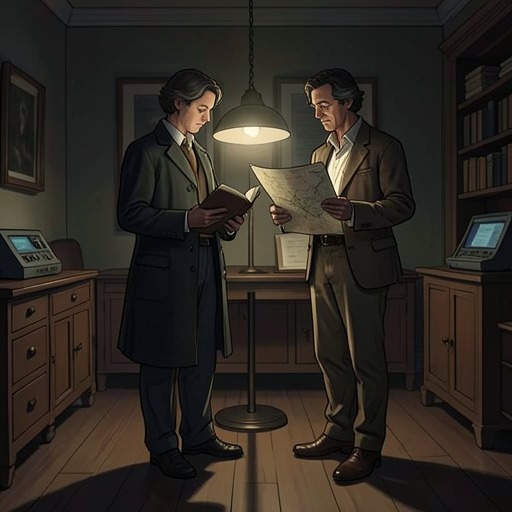
Tommy does not dismiss the rumor simply because it was absent from Hailsham conversation. He considers whether it might explain events that had once seemed disconnected. If a couple had to prove that their love was real, the people deciding their case would need evidence that distinguished lasting feeling from a passing crush or sexual attraction. Tommy imagines that Madame’s collection could provide that evidence: she had kept students’ work from childhood, and the accumulated art might allow someone to judge whether a couple’s creations showed a genuine correspondence. In his theory, the gallery revealed the students’ souls and could help establish whether two people were a true match.
This account gives the collection a new meaning for Tommy. The guardians’ emphasis on painting and other creative work, and Madame’s removal of selected pieces, might have seemed to prepare the students for an assessment that could eventually secure a deferral. Tommy also links the theory to Miss Lucy’s earlier reassurance that his lack of artistic ability did not matter. He now supposes that she had comforted him while knowing that it did matter to the special opportunity Hailsham students supposedly possessed. Because he believes that little of his own work entered Madame’s gallery, he concludes that he may have thrown away his chance before he understood what it was.
That interpretation grows out of real features of Hailsham life. At the Exchanges, students received tokens for work the guardians selected, then used those tokens to acquire creations made by students in their own year. The Exchanges were a major means of building collections of personal possessions, and artistic ability also affected how students were regarded by their peers. By the time the students were ten, the honor once associated with Madame taking a piece had become more complicated: they had begun to see selected work as valuable property they were losing. These practices establish that art was bound up with status, possessions, and the students’ sense of what Hailsham valued. They do not, by themselves, establish that art was used to decide whether lovers qualified for extra time.
The Search for Madame
Tommy’s theory turns the rumor into a practical question: if a couple wanted to apply, where would they go, and what would they need to do? He sees finding Madame as the only obvious next step, since he imagines that she, or someone connected to the gallery, could explain the process. Kathy doubts that contact will be easy. The students know little about Madame, and remember that she seemed not to want them near her. Tommy acknowledges the difficulty, but thinks they have time. The gap between their urgency and their uncertainty is part of the rule’s hold over them: it offers a procedure just imaginable enough to pursue, without giving them any reliable means of knowing whether it exists.
Ruth eventually supplies Madame’s address. During the trip she had arranged with Kathy and Tommy, she hands the paper to Tommy and tells him to keep it for when Kathy changes her mind. The gesture gives the pair a possible route toward testing the rumor, while also tying Ruth’s attempted repair of her relationships to their shared hope. Later, after Ruth’s second Donation, Kathy promises her that she will become Tommy’s carer as soon as she can. Those events make the stakes intimate rather than abstract: the imagined postponement concerns time together, while the actual course of their lives continues through the carer and Donation system.
What Hailsham Could and Could Not Do
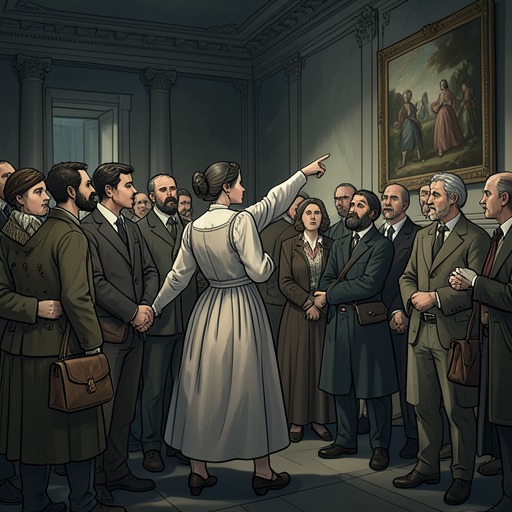
When Kathy and Tommy finally speak with Miss Emily, the hoped-for deferral is explicitly ruled out. Miss Emily says that such a dream would always have been beyond Hailsham’s power, even when its influence was at its height. Her explanation separates the real work of the gallery from Tommy’s imagined use for it. Hailsham collected and exhibited student art to demonstrate to the wider public that students raised in humane, cultivated surroundings could be as sensitive and intelligent as ordinary people. The art was evidence in a campaign for recognition, not a private test by which a couple could earn more time.
Miss Emily describes Hailsham, Glenmorgan House, and the Saunders Trust as a small, vocal movement that challenged how the Donation Programme was conducted. The movement sought better conditions and public acknowledgment of students’ humanity; it did not have the power to suspend the system itself. Miss Emily traces the limits of that effort to the public’s dependence on medical breakthroughs and the organs supplied by students. However uncomfortable people were about the students’ existence, she says, they were unwilling to give up cures for serious illnesses. Hailsham could secure improvements for a select group, but its advocates could not make the world abandon Donations.
The Deferral rule therefore joins a genuine history of Hailsham’s advocacy to an imagined benefit that the school never offered. Its persuasive force comes from details students already know: their art was collected, Madame’s gallery existed, and Hailsham had treated its pupils differently from other institutions. Tommy arranges those facts into a story in which creativity might buy time and love might be publicly verified. Miss Emily’s account preserves the importance of the art while withdrawing that promise. The gallery could help show that students possessed inner lives; it could not convert that recognition into freedom from Donation.